
Case Study
Case Study: 3D Scanning and Reverse Engineering a Bitumen Pump Casting
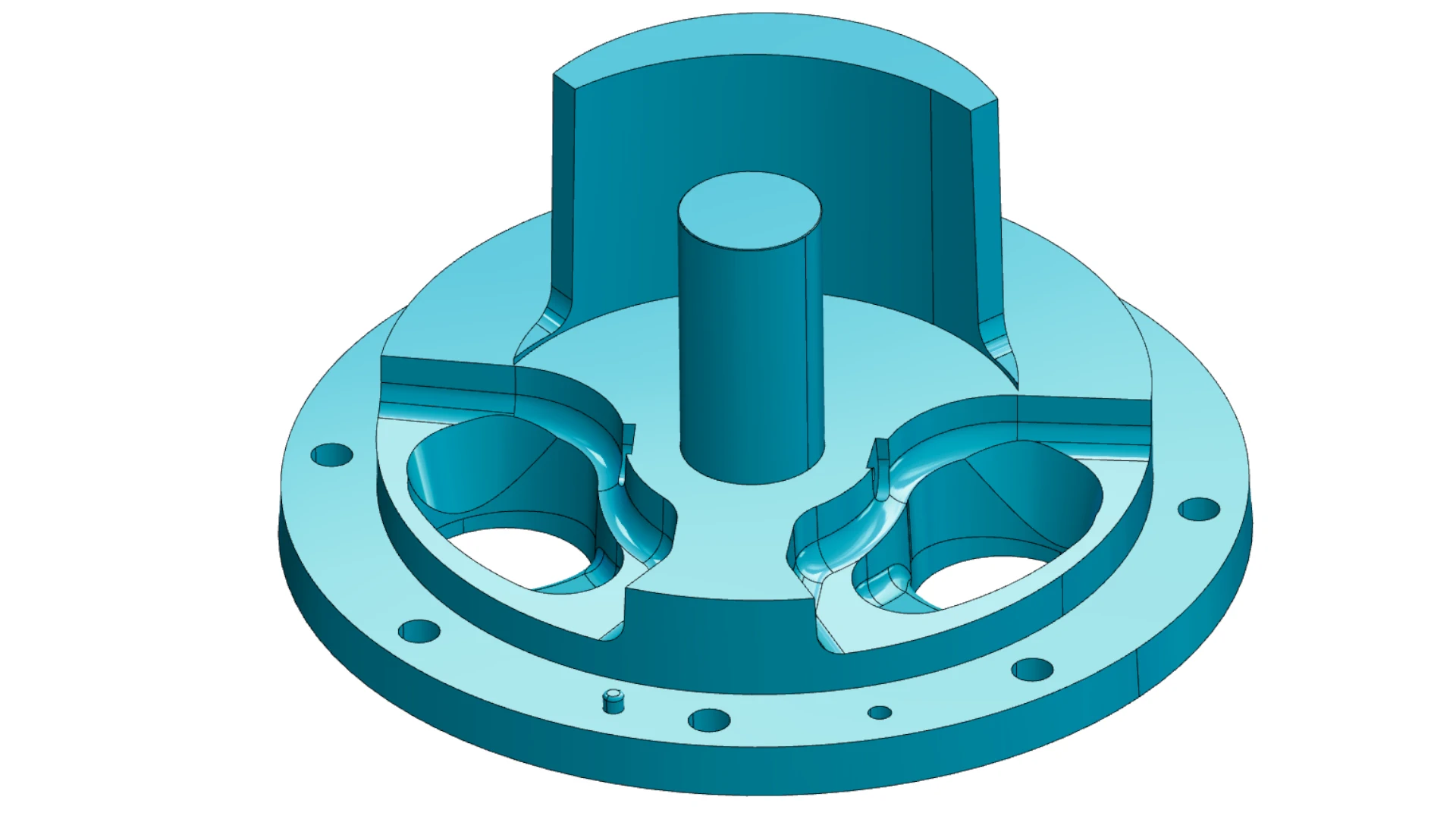
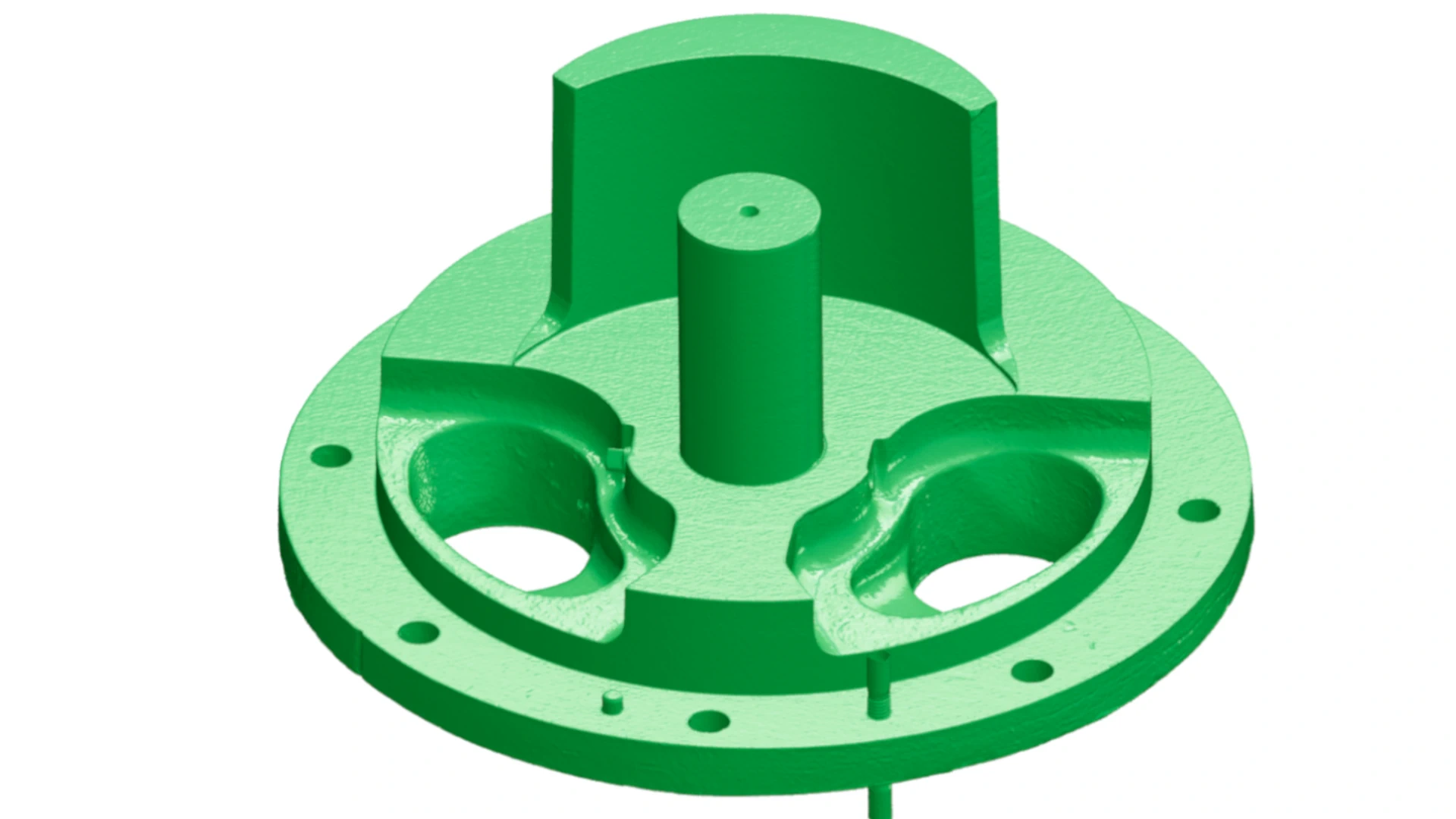
Project Overview: Creating an accurate 3D CAD model of a bitumen pump casting
Services Provided: High-precision laser 3D scanning and computer-aided design (CAD) modelling.
Project Outcome: Delivering the client with a clean, editable 3D CAD model suitable for use in sand casting and manufacturing.
Why OML3D: Our advanced 3D scanning equipment and reverse engineering expertise enabled us to achieve the accuracy and detail required for the project.
Reverse Engineering Industrial Components with 3D Scanning in Sydney, NSW Accurately recreating industrial castings can be challenging, particularly when original engineering drawings or CAD files are no longer available. In this project, we were supplied with a heavy bitumen pump casting that required accurate 3D scanning and reverse engineering to create a usable digital model. The project involved high-accuracy laser 3D scanning, scan processing, reverse engineering, dimensional verification and the application of appropriate draft angles to surfaces required for casting. Having previously completed the reverse engineering of a water turbine impeller for AESSEAL Australia Pty Ltd (NSW), we were pleased to work with them again on a second project. As a company specialising in the servicing and manufacture of industrial pumps, they required an accurate digital model of a bitumen pump casting for further engineering and manufacturing purposes.
The original part was available, but no CAD files or manufacturing drawings existed. Using high-accuracy laser 3D scanning and reverse engineering, we created a complete digital model ready for casting. Projects like this help keep essential equipment operating with minimal downtime, often without the people who rely on these services ever knowing the work has taken place.
The Project
The client supplied us with a heavy bitumen pump casting for 3D scanning and reverse engineering. The objective was to capture the existing geometry and create an accurate CAD representation that could be used for further engineering and manufacturing. Because the original component was a physical casting rather than an existing CAD model, the 3D scan provided a detailed digital reference for rebuilding the geometry.
Step 1: Preparing the Casting for 3D Scanning
Before scanning, the casting was cleaned and carefully prepared. Surface preparation is an important part of the 3D scanning process, particularly when dealing with industrial components that may have dirt, residue, corrosion or other contaminants. The casting was then positioned to provide access to the required surfaces and features while allowing the scanner to capture the component from multiple angles.
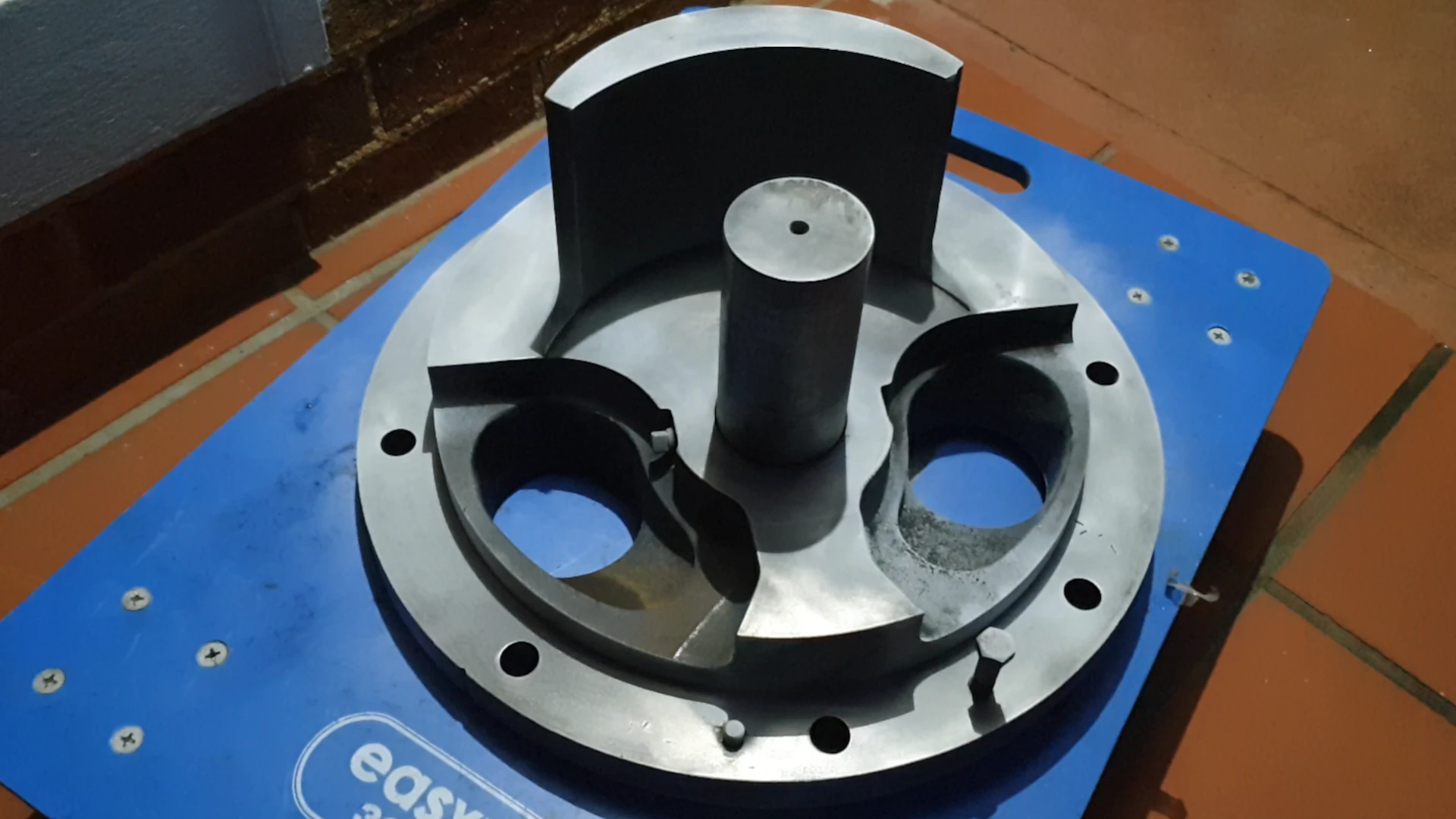
Step 2: Laser 3D Scanning Under Controlled Conditions
The component was scanned using laser 3D scanning technology to capture its geometry in detail. The scanning process was carried out under controlled temperature and lighting conditions to help maintain consistent scanning results. Multiple areas of the casting were captured to produce a complete digital representation of the component. For a large and relatively complex industrial casting, careful scanning and positioning are important to ensure that all relevant surfaces and features are captured.
Step 3: Scan Processing and Mesh Preparation
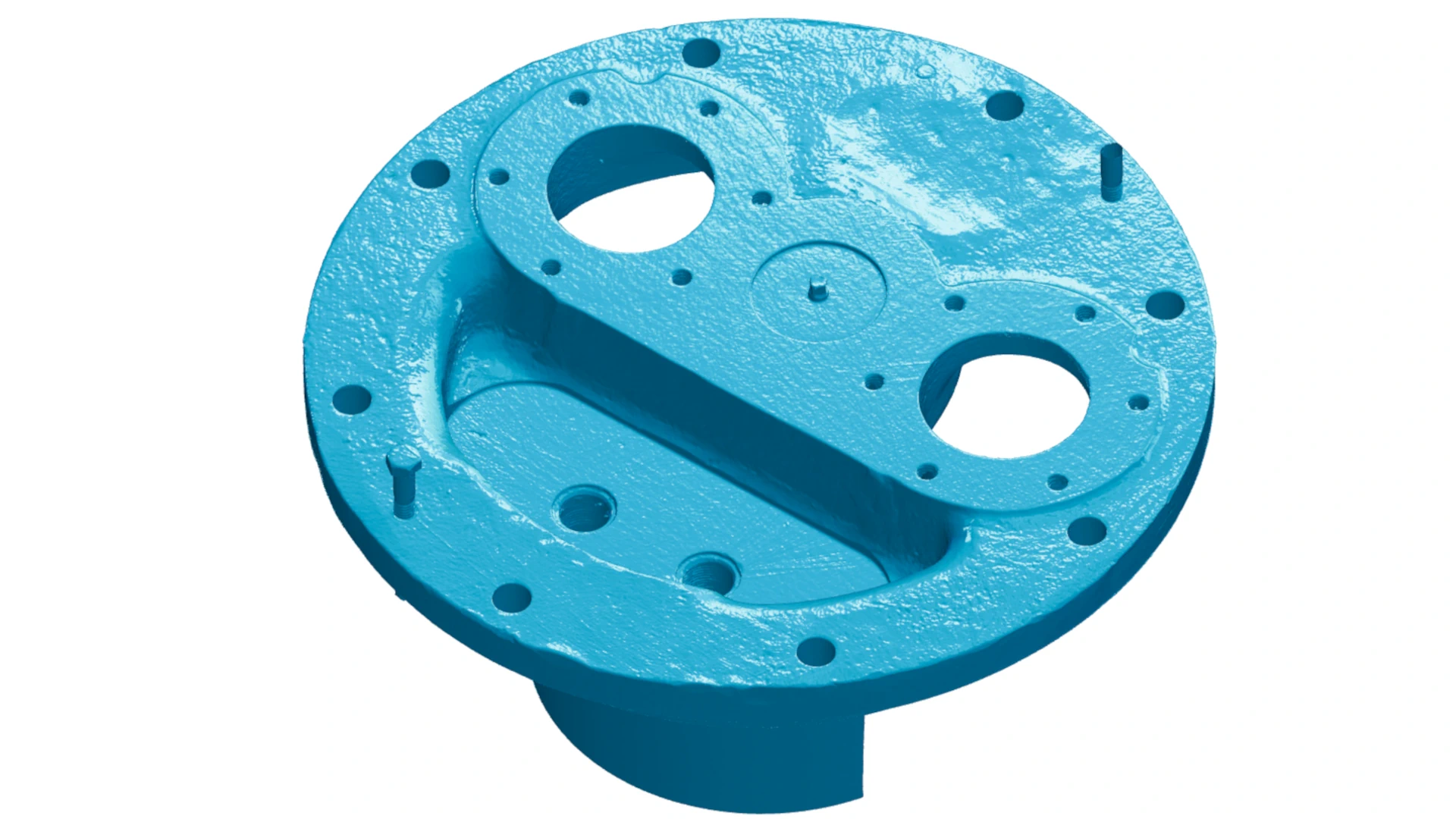
Once scanning was completed, the captured data was processed to produce a clean and usable 3D mesh. The scan data was aligned and cleaned before being used for the reverse engineering process. The resulting mesh provided the geometric reference required to reconstruct the component as a CAD model.
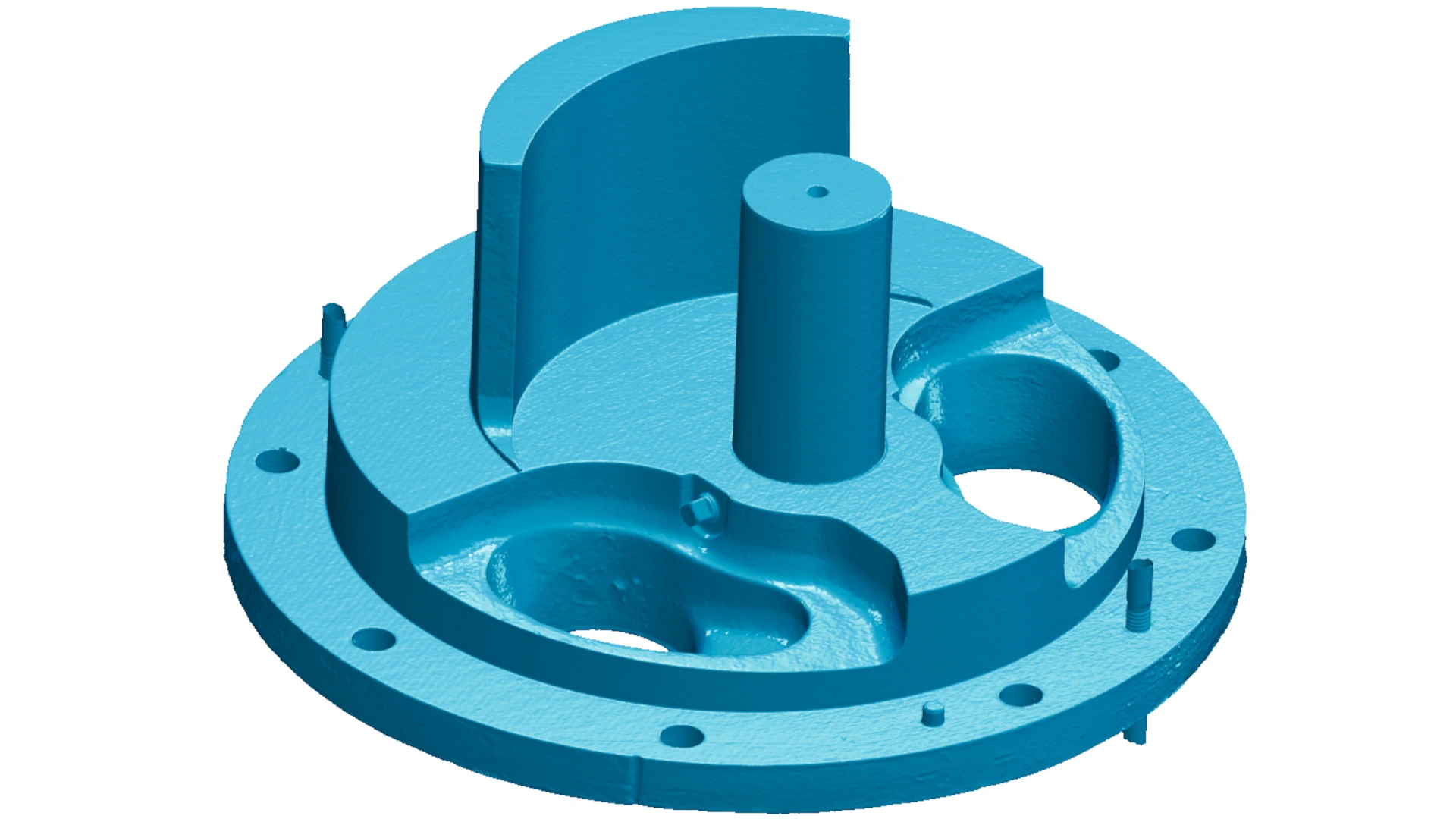
Step 4: Reverse Engineering the Pump Casting
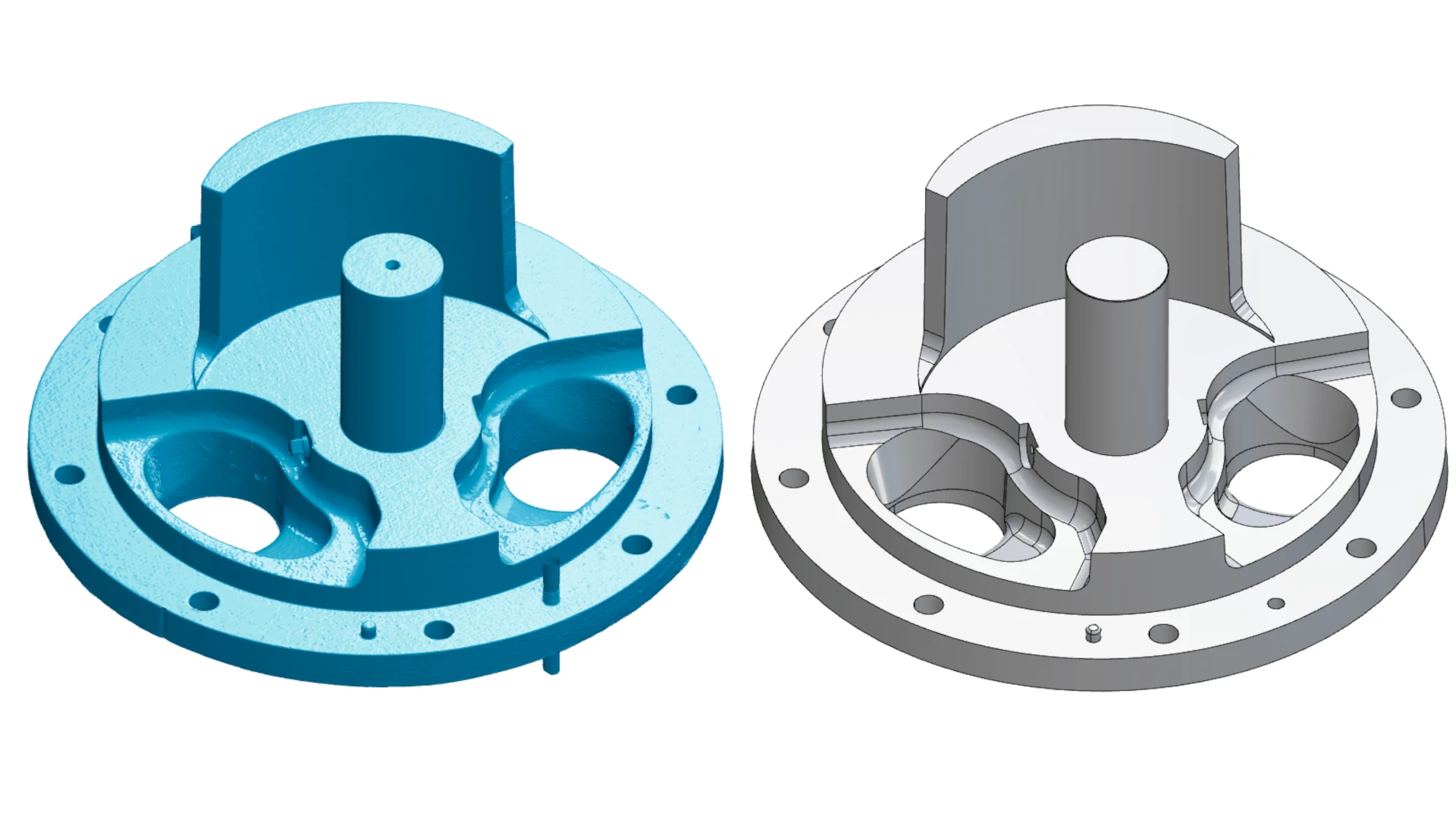
The processed scan data was then used to reverse engineer the bitumen pump casting. The geometry was reconstructed into a CAD model, allowing important dimensions and features of the original component to be defined more precisely. This provides a much more useful engineering model than a raw scan mesh, particularly when the component needs to be modified, manufactured or used to create tooling. A CAD model is defined using mathematically controlled geometry, allowing it to be edited and used for advanced manufacturing. A raw scan mesh, by comparison, is composed of a large number of individual triangles representing the scanned surface.
Step 5: Casting Considerations and Dimensional Verification
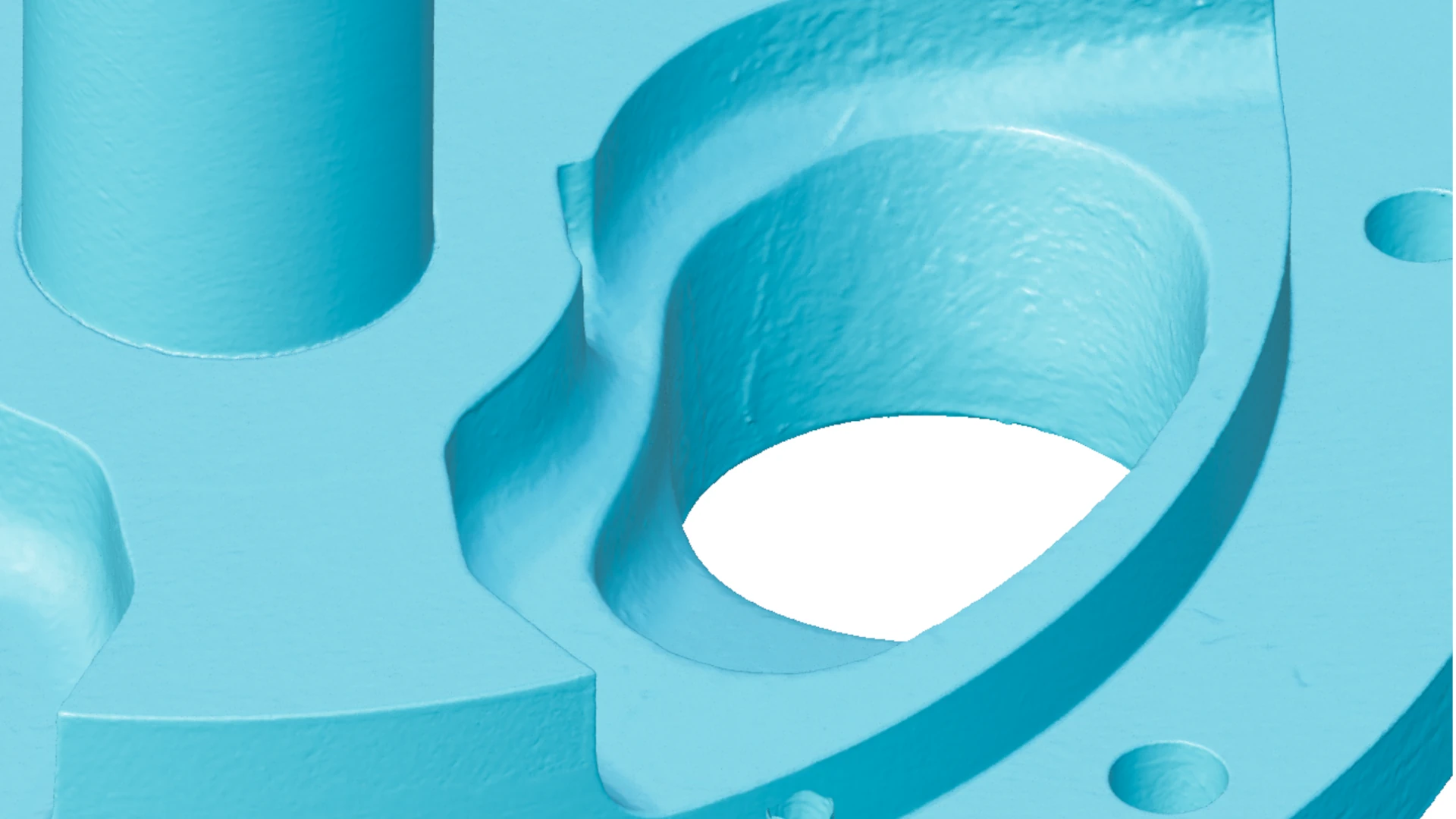
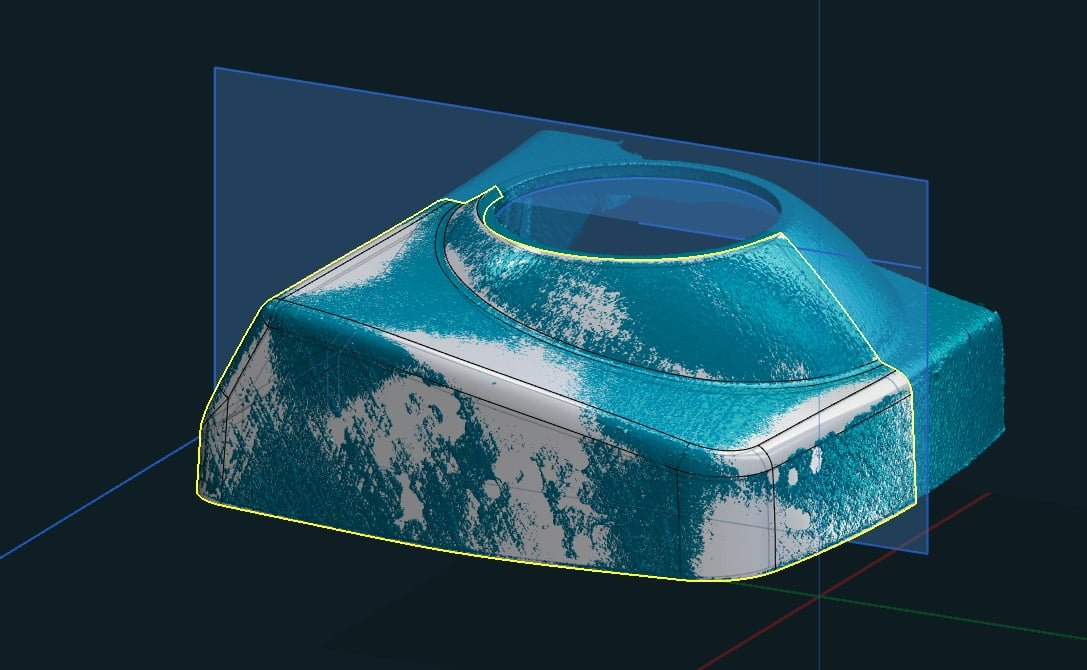
Reverse engineering a casting requires more than simply reproducing every surface captured by the scanner. Cast components can have naturally rough or irregular surfaces due to the manufacturing process, with variations caused by material shrinkage, mould design, pattern construction and parting lines. Older components may also show wear, machining or other changes from previous use. Care was therefore taken when interpreting the scan data to distinguish the intended engineering geometry from manufacturing variations and surface imperfections. Where appropriate, symmetrical features and design surfaces were reconstructed using the scan data, manual measurements and engineering judgement.
Why 3D Scanning Is Useful for Industrial Castings
Industrial machinery often contains components that were manufactured many years ago, with original drawings or digital CAD files no longer available. 3D scanning provides a practical way to digitally capture an existing component and use it as the basis for reverse engineering. For large and complex castings, this can simplify the reconstruction process considerably. Instead of relying entirely on manual measurements, the scan provides a detailed geometric reference of the physical component. The resulting CAD model can then be used for further engineering, modification, manufacturing or development of replacement components. 3D scanning can be particularly useful for:
- • Industrial pump and machinery components
- • Replacement and obsolete castings
- • Reverse engineering existing equipment
- • Creating CAD models from physical components
- • Pattern and mould development
- • Casting and manufacturing applications
- • Repair and maintenance projects
- • Modifying existing industrial components
- • Reproducing difficult-to-source machine parts
By combining 3D scanning with reverse engineering, it becomes possible to reproduce complex components, extend the service life of existing equipment and keep important systems operating with minimal disruption. Most people will never see the components inside these machines, but they benefit from them every day through reliable access to clean water, industrial production and the infrastructure that supports modern life.
Professional 3D Scanning and Reverse Engineering Services in Sydney
Based in Sydney, NSW, we provide professional services for manufacturers, engineering companies, councils, utilities, and industrial businesses throughout Australia.
Our services include:
- Laser 3D scanning
- Structured Light Scanning (SLS)
- Reverse engineering
- 2D and 3D CAD Design
- 3D printing
- Inspection and measurement
- Fiber Laser Engraving
Need an Industrial Part Reverse Engineered?
If you have an obsolete component, damaged casting, or a part with no existing drawings, we can help.
Contact our Sydney team to discuss your project.
We provide professional laser 3D scanning, reverse engineering, and 3D printing services for industrial, manufacturing, and engineering applications across Australia.
Contact Us