
Case Study: 3D Scanning and Reverse Engineering a Water Turbine Impeller
Case Study
3D Scanning and Reverse Engineering a Water Turbine Impeller
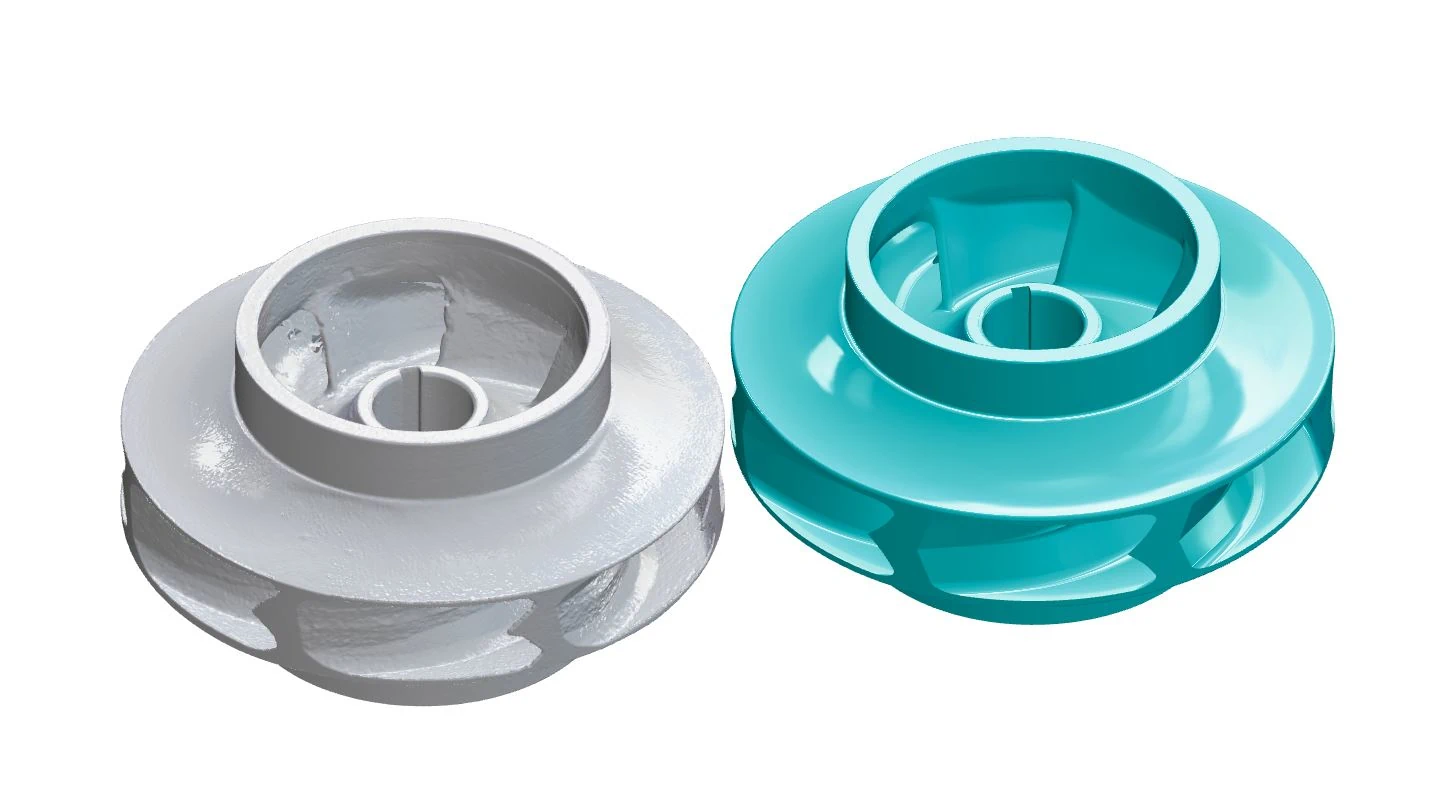
Project Overview: Creating an accurate 3D CAD model of a water turbine casting.
Services Provided: High-precision laser 3D scanning and computer-aided design (CAD) modelling.
Project Outcome: Delivering the client with a clean, editable 3D CAD model suitable for use in sand casting and manufacturing.
Why OML3D: Our advanced 3D scanning equipment and reverse engineering expertise enabled us to achieve the accuracy and detail required for the project.
Reverse Engineering Industrial Components with 3D Scanning in Sydney, NSW Many of the machines that keep water treatment plants, pumping stations and industrial facilities operating rely on components that are no longer available or have limited documentation. When these parts wear out or become damaged, replacing them is not always as simple as ordering a new one. Recently, we provided out services to AESSEAL Australia Pty Ltd (NSW) who needed to reproduce a cast water turbine impeller.
The original part was available, but no CAD files or manufacturing drawings existed. Using high-accuracy laser 3D scanning and reverse engineering, we created a complete digital model ready for casting. Projects like this help keep essential equipment operating with minimal downtime, often without the people who rely on these services ever knowing the work has taken place.
The Project
The client supplied the original cast impeller, which had been removed from service and required reverse engineering for a new casting. Impellers can contain complex curved blades, internal transitions and irregular cast surfaces that make them difficult to measure accurately using conventional methods. Creating an accurate digital model was essential to ensure the replacement part matched the original geometry.
Step 1: Inspecting the Original Part
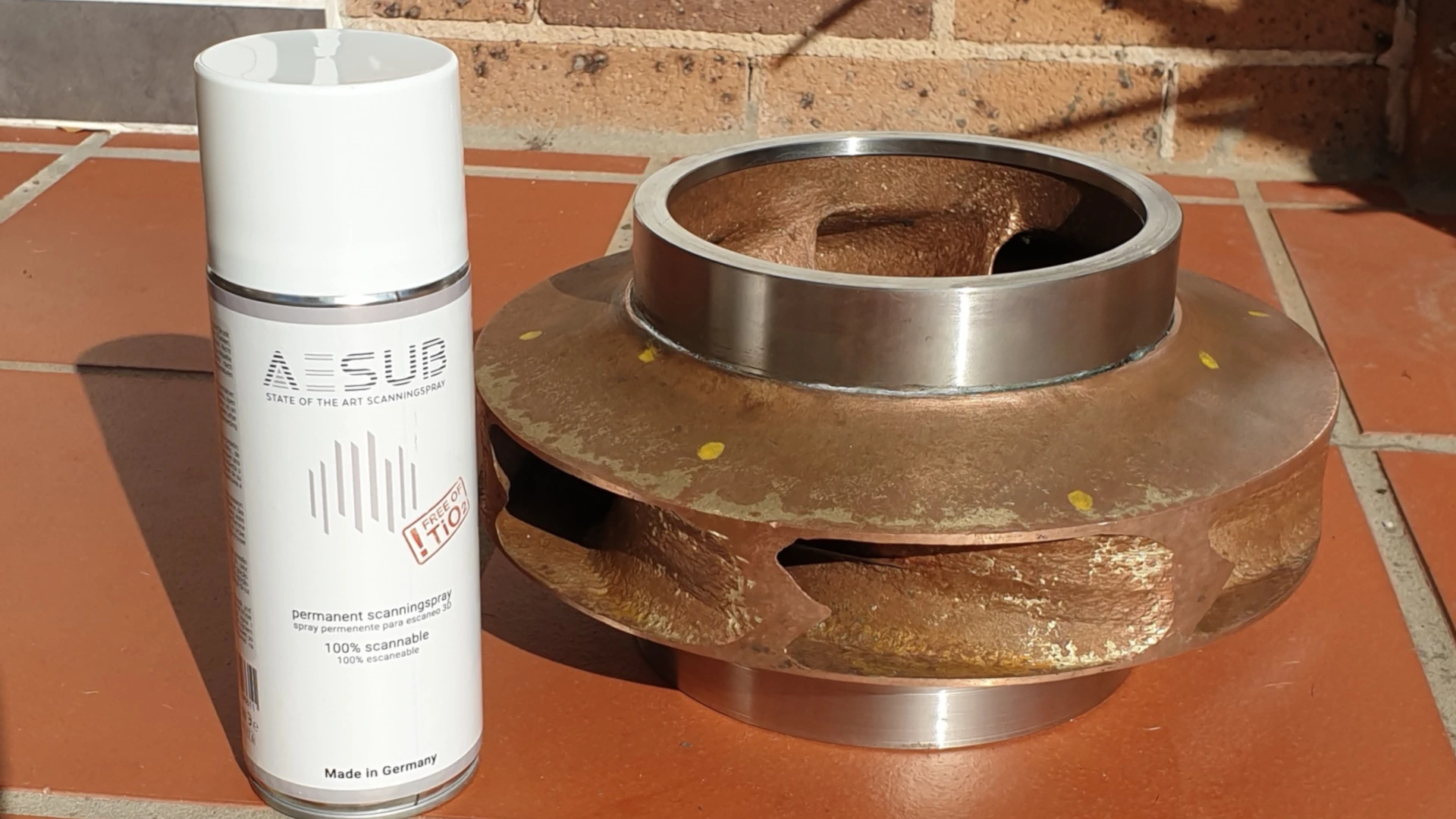
The first step was to inspect the impeller and determine the most suitable scanning method. Due to the size, shape and cast surface finish of the component, high-resolution laser 3D scanning was selected. Laser scanning is well suited to capturing larger engineering components with complex freeform geometry while maintaining excellent dimensional accuracy.
Step 2: Laser 3D Scanning
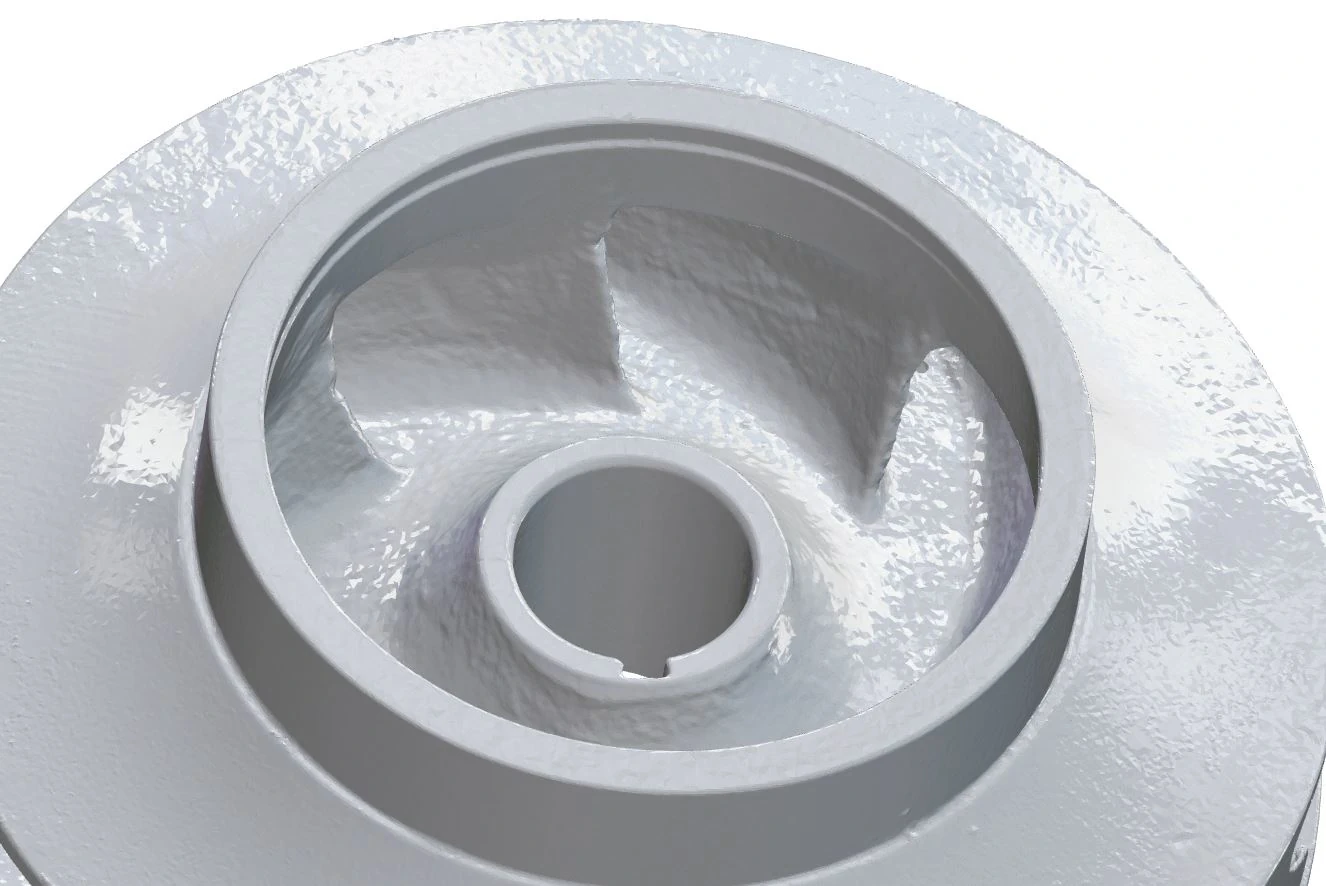
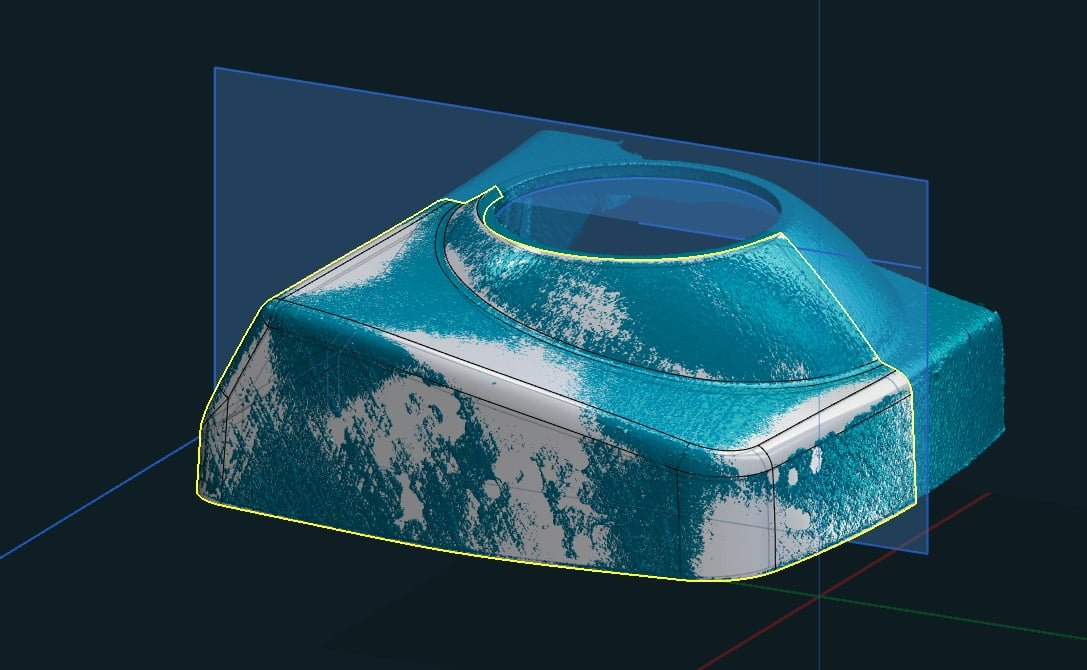
The impeller was scanned from multiple angles using our professional laser 3D scanning system. Capturing the part from different positions allowed every blade, hub and external surface to be recorded. The individual scans were then aligned and combined to produce a complete, high-resolution 3D mesh of the component. The scan accurately captured the overall geometry along with the subtle curves and blade profiles that are critical to the performance of an impeller.
Step 3: Reverse Engineering for Casting
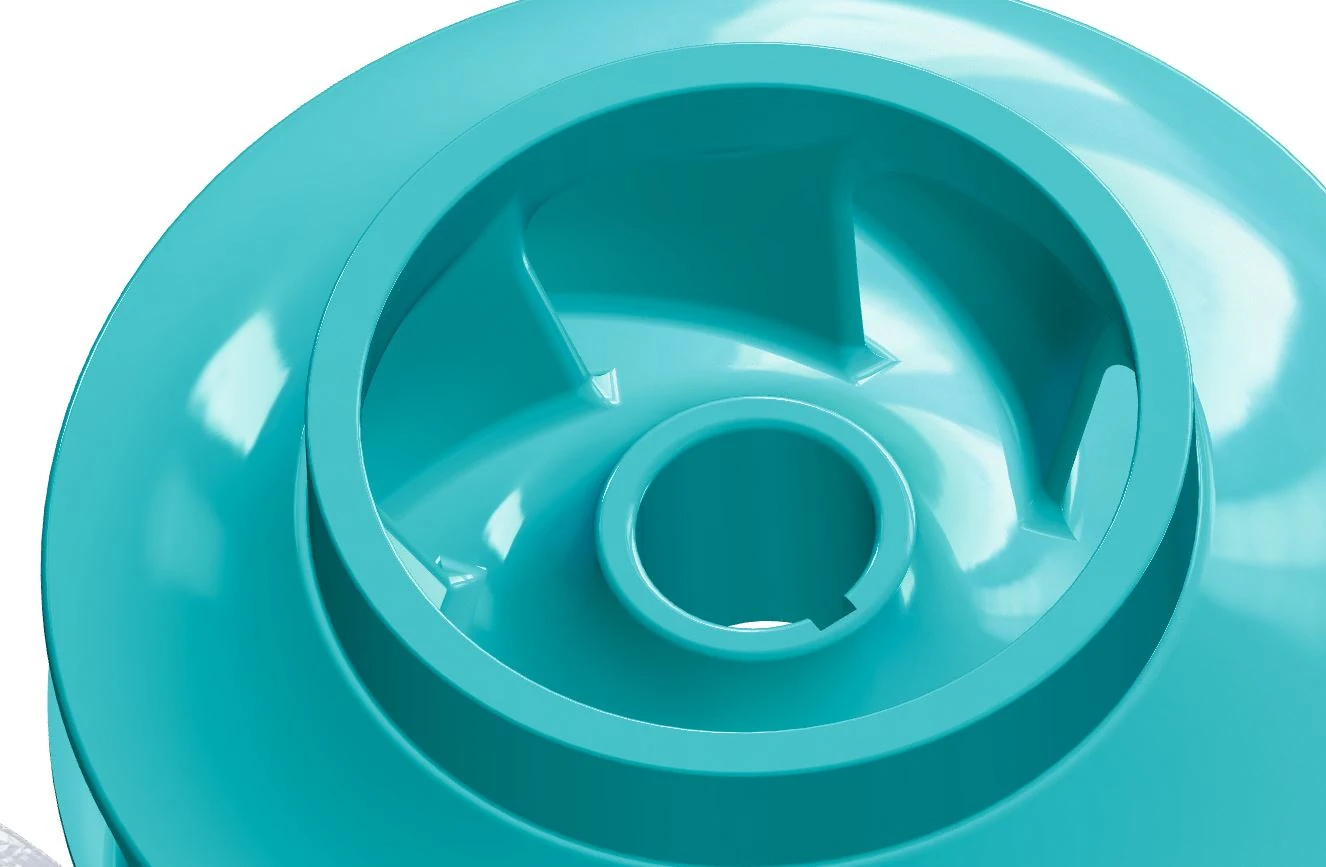
Once the scan data had been processed, the mesh was used as the basis for reverse engineering. A new CAD model was created from the scanned geometry, producing manufacturing-ready files suitable for casting. Depending on the application, reverse engineering may also include refining surfaces, correcting wear, restoring damaged areas or incorporating casting allowances where required.
Step 4: Manufacturing-Ready CAD Files
The completed CAD files were supplied to the client for manufacturing. Unlike a scanned mesh, an editable CAD model provides far greater flexibility. If the impeller needs to be modified in the future, dimensions can be adjusted, features can be added or removed, and design improvements can be incorporated without starting the reverse engineering process again. This is particularly valuable when upgrading existing equipment, adapting parts to suit different installations, or making design changes before a new casting is produced. Having an editable CAD model also creates a permanent digital record that can be used to manufacture replacement components whenever they are required.
Supporting the Industries That Keep Australia Running
Projects like this often happen behind the scenes, but they play an important role in keeping essential infrastructure operating. Water treatment plants, pumping stations, manufacturing facilities, mining operations and processing plants all rely on specialized equipment that works every day with little attention. When a critical component fails, reverse engineering can provide a practical solution when replacement parts are unavailable or no longer manufactured.
By combining 3D scanning with reverse engineering, it becomes possible to reproduce complex components, extend the service life of existing equipment and keep important systems operating with minimal disruption. Most people will never see the components inside these machines, but they benefit from them every day through reliable access to clean water, industrial production and the infrastructure that supports modern life.
Professional 3D Scanning and Reverse Engineering Services in Sydney
Based in Sydney, NSW, we provide professional services for manufacturers, engineering companies, councils, utilities, and industrial businesses throughout Australia.
Our services include:
- Laser 3D scanning
- Structured Light Scanning (SLS)
- Reverse engineering
- 2D and 3D CAD Design
- 3D printing
- Inspection and measurement
- Fiber Laser Engraving
Need an Industrial Part Reverse Engineered?
If you have an obsolete component, damaged casting, or a part with no existing drawings, we can help.
Contact our Sydney team to discuss your project.
We provide professional laser 3D scanning, reverse engineering, and 3D printing services for industrial, manufacturing, and engineering applications across Australia.
Contact Us